
The New Standard for CPG Supply Chains in 2026: Real-Time Visibility & Intelligent Distribution
In 2026, supply chain resilience has become a baseline requirement for Consumer Packaged Goods (CPG) organizations rather than a competitive differentiator. Rising demand volatility, channel complexity, and faster retail execution cycles mean that delayed reporting and siloed systems can no longer support effective decision-making. Industry research highlights the scale of the gap: nearly 73% of CPG companies rate the lack of real-time inventory visibility as a high or medium priority challenge.
At the same time, 80% of organizations report that limited collaboration across supply chain, sales, marketing, and finance teams reduces their ability to respond quickly to disruptions and demand shifts. Modern CPG leaders are shifting toward real-time, connected supply chain models powered by continuous data streams, predictive analytics, and cross-functional collaboration. The focus has moved beyond visibility alone toward actionable, real-time intelligence that supports faster planning, smarter replenishment, and more coordinated execution across partners.
Why Traditional Visibility Models No Longer Work
Many CPG supply chains still rely on batch-based reporting, siloed systems, and spreadsheet-driven reconciliations. While these methods provide historical insight, they fall short in fast-changing market conditions. By the time data is compiled and reviewed, the operational reality has often already changed.
The core limitation is not just a lack of data; it is a lack of usable, timely, and connected data. Retail signals, distributor inventory, field execution insights, and demand patterns frequently sit in separate systems. Without integration and real-time synchronization, decision-makers are forced to react instead of anticipate.
This gap between data availability and decision readiness is now one of the biggest risk factors in CPG operations.
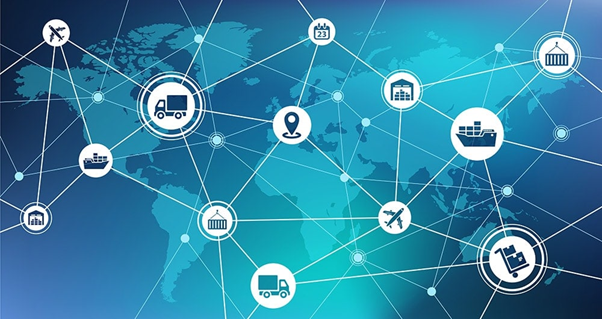
Key Pressure Points and How CPG Leaders Are Responding
Inventory management continues to be one of the most persistent challenges. Forecast inaccuracies, incomplete channel visibility, and delayed stock reporting often lead to a mix of stockouts in high-velocity locations and excess inventory elsewhere. The issue is compounded by SKU proliferation and faster product rotations.
Another growing challenge is cross-functional misalignment. Sales, supply chain, marketing, and finance teams often operate with different datasets and performance views. Without a shared operational picture, coordination slows down, and corrective actions are delayed.
Waste reduction and sustainability tracking have also become more critical. Yet many organizations still depend on lagging indicators and manual tracking methods, which prevent proactive intervention. In fast-moving categories, delayed signals directly translate into write-offs and margin erosion.
1. The Shift Toward Real-Time Supply Chain Intelligence
Leading CPG organizations are investing in real-time data infrastructure to capture and process operational signals continuously. Instead of periodic snapshots, they operate with live data layers that reflect what is happening across retail shelves, distributor warehouses, and field routes.
This shift is supported by modern cloud architectures, API-driven integrations, and automated data ingestion pipelines. Retail POS feeds, distributor stock updates, and field execution inputs are now being unified into operational intelligence platforms that deliver continuous visibility.
Advanced analytics models are increasingly embedded into these platforms. Predictive demand sensing, anomaly detection, and scenario simulation help planners and operators move from reactive correction to proactive control. Decision cycles that once took weeks are now compressed into hours or minutes.
2. Collaboration as a Core Resilience Strategy
Resilient supply chains are built through collaboration, not isolation. CPG brands are expanding data-sharing frameworks with distributors and retail partners to improve joint planning and execution. Shared dashboards, role-based access systems, and collaborative replenishment workflows are becoming more common.
This collaborative approach improves forecast accuracy, reduces replenishment friction, and strengthens partner trust. It also enables faster coordinated responses when disruptions occur, whether due to logistics delays, regulatory shifts, or sudden demand spikes.
Technology is the enabler here, but governance and process alignment are equally important. Organizations that combine shared data platforms with clear accountability models see the strongest results.
3. The Expanding Role of AI and Predictive Analytics
Artificial intelligence is moving from experimental to operational in CPG supply chains. AI models now support demand sensing at granular levels, recommend replenishment quantities, detect distribution gaps, and identify emerging store-level opportunities.
Predictive analytics also plays a growing role in route-to-market planning, promotion planning, and territory coverage optimization. Instead of relying purely on historical trends, systems increasingly incorporate real-time signals and external variables to generate forward-looking recommendations.
This evolution transforms supply chain management from a reporting function into a decision intelligence function.
4. From Visibility to Execution: Closing the Last Mile Gap
One of the most important developments in 2026 is the connection between supply chain intelligence and field execution systems. Visibility alone does not create value unless it drives action at the last mile, at the distributor, the route, and the store shelf.
Integrated platforms now connect distribution management, retail execution, route optimization, and AI-driven insights into a unified operational layer. This ensures that insights translate directly into tasks, route changes, replenishment decisions, and in-store corrections.
When execution systems and intelligence systems are connected, response time drops and outcome reliability increases.
Conclusion: The Connected, Intelligent CPG Supply Chain
Supply chain disruption is no longer an occasional event; it is a constant operating condition. The CPG organizations that succeed in this environment are those that invest in real-time visibility, predictive intelligence, and connected execution capabilities. They replace fragmented reporting with continuous insight and replace delayed reactions with proactive control.
Digital platforms that unify distribution, retail execution, AI analytics, and route-to-market intelligence are becoming central to this transformation. Ivy Mobility’s Distribution Management System enables CPG brands to operationalize real-time data, strengthen partner collaboration, and convert supply chain visibility into a measurable execution advantage. Brands looking to modernize their distribution and build resilient, data-driven operations should explore how an integrated distribution management platform can accelerate results. Book a demo to see how a next-gen Distribution Management System can transform your supply chain execution and growth outcomes.



 English (UK)
  English (United States)
  Arabic
  French
  Spanish
  Portuguese